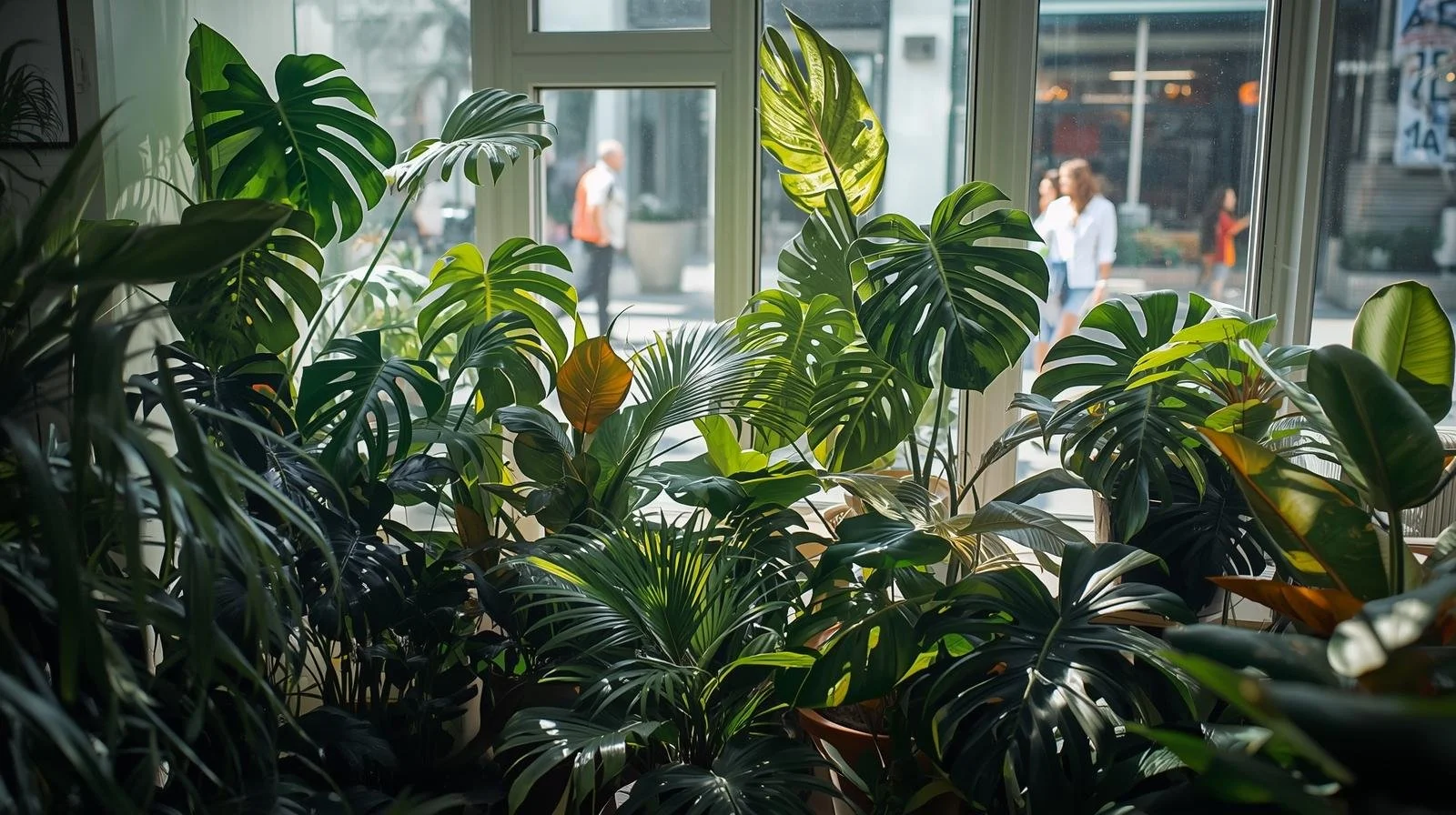
Monstera, Care Guide
Care Guide:
Monsteras are resilient, low-maintenance plants and a great choice for beginners. While we carry several varieties — including Thai Constellations and Esqueletos — the core care principles remain the same across the board.
Handle your companion with patience and intention, and it will grow and flourish over time. Care can vary depending on environment, so observe your plant and adjust as needed.
Thank you for being part of Casa Verde.
❋ Lighting
Monsteras prefer bright, indirect light.
Ideal placement is near an east- or north-facing window.
Avoid direct sunlight, as it can scorch the leaves — especially on variegated varieties. Plants like the Thai Constellation require slightly more light than green-leaved Monsteras to maintain their natural patterning.
❋ Watering
Use the soak-and-dry method.
Water only when the top one to two inches of soil feel dry. When watering, do so thoroughly and allow all excess water to drain away.
Overwatering is the most common cause of issues. Always use a pot with drainage holes, and reduce watering during winter when growth naturally slows.
❋ Humidity
Monsteras thrive in moderate to high humidity, ideally between sixty and eighty percent.
Humidity can be increased using a humidifier, a pebble tray, grouping plants together, or placing the plant in a naturally humid space such as a bathroom.
❋ Lighting
Monsteras prefer bright, indirect light.
Ideal placement is near an east- or north-facing window.
Avoid direct sunlight, as it can scorch the leaves — especially on variegated varieties. Plants like the Thai Constellation require slightly more light than green-leaved Monsteras to maintain their natural patterning.
❋ Temperature
Keep your Monstera in a stable environment between sixty-five and eighty degrees Fahrenheit.
Avoid cold drafts, air vents, and sudden temperature changes, which can stress the plant.
❋ Pest & Problems
Watch for common pests such as spider mites, mealybugs, and scale.
These can be treated with neem oil or insecticidal soap. Brown or crispy leaf edges often indicate low humidity or inconsistent watering.
❋ Soil and Pot
Use a well-draining, airy soil mix. A blend containing peat moss, perlite, and orchid bark works well.
Choose a pot with drainage holes, and size up only one to two inches wider than the current root ball. Oversized pots can retain excess moisture and lead to root issues.
❋ Repotting
Repot your Monstera every one to two years, or when roots become visible at the soil surface or through drainage holes.
If your plant is newly brought home, allow it to acclimate for about one month before repotting to reduce stress.
❋ Fertilizer
Fertilizers are labeled with three numbers representing nitrogen, phosphorus, and potassium — commonly referred to as N, P, and K.
For Monsteras, use a balanced, water-soluble fertilizer at half strength once a month during spring and summer. Pause fertilizing in fall and winter when growth slows.
❋ Notes
Variegated Monsteras grow more slowly due to reduced chlorophyll in their variegated leaves. This is normal — patience is part of the process.
Monsteras are toxic to pets if ingested. Place thoughtfully if you share your space with animals.