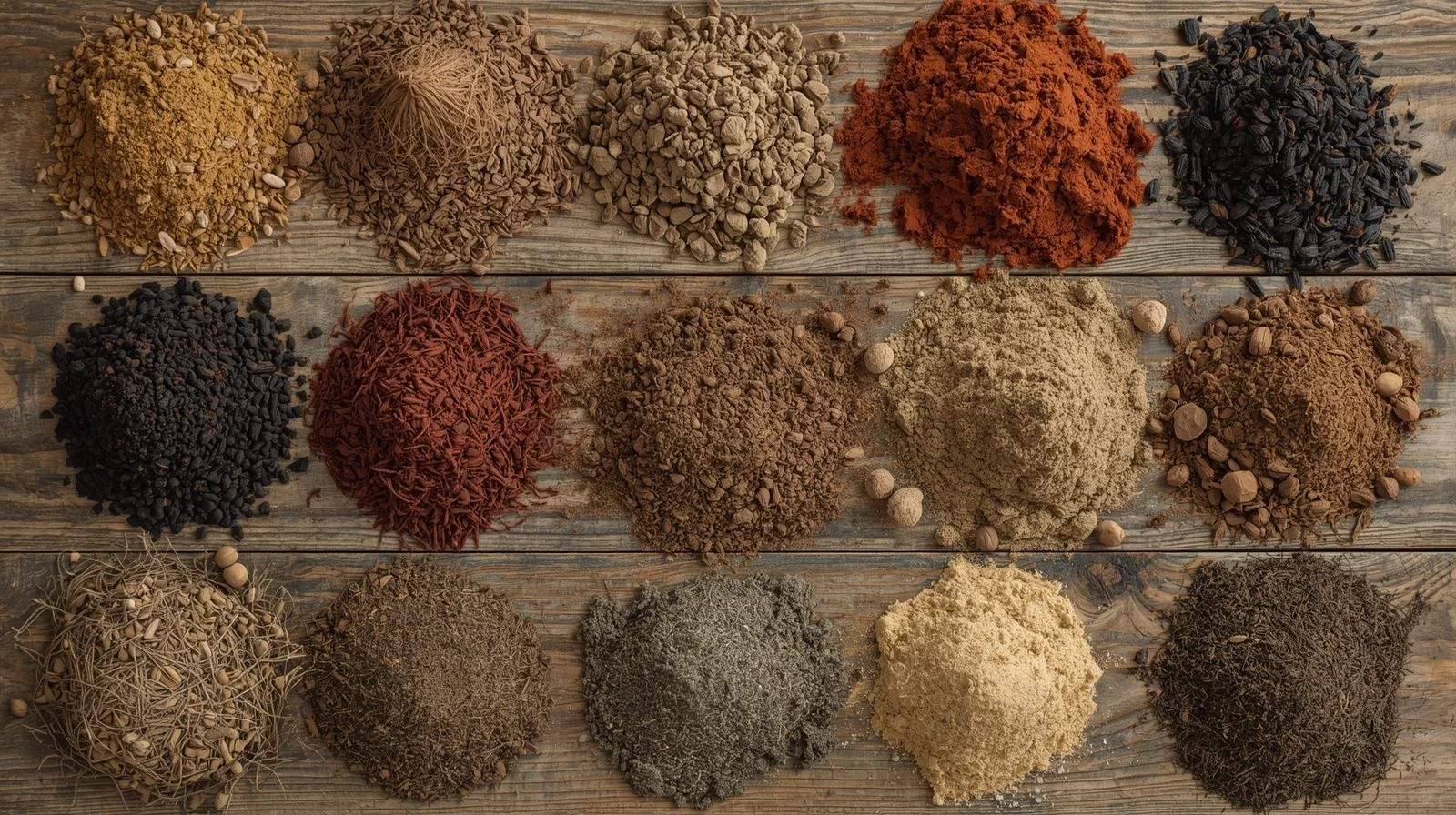
Soil Types & Growing Media
Care Guide:
Understanding What Your Plants Grow In
Healthy plants start below the surface. Different plants evolved in different environments, and their root systems depend on soil that matches those conditions. This guide introduces the most common soil types and blends used for houseplants, along with the plant groups they support best.
*All-Purpose Potting Mix
Best for:
Pothos, Philodendron, Monstera, Peace Lily, Spider Plant, most tropical houseplants
Description:
A balanced, lightweight mix designed for general use. Holds moisture while still allowing airflow to roots.
Typical Components:
Peat moss or coco coir
Perlite or pumice
Compost or organic matter
Why it works:
Good moisture retention + decent drainage = flexible and beginner-friendly.
*Aroid Mix (Chunky Tropical Blend)
Best for:
Monstera, Philodendron, Anthurium, Alocasia, Syngonium
Description:
An airy, fast-draining blend that mimics the loose forest floor where many tropical plants grow.
Typical Components:
Orchid bark
Perlite or pumice
Coco coir or peat
Charcoal
Why it works:
Prevents root rot while allowing roots to breathe.
*Cactus & Succulent Mix
Best for:
Cactus, succulents, euphorbia, desert plants
Description:
Very fast-draining mix designed to dry quickly between waterings.
Typical Components:
Sand or grit
Perlite
Pumice
Low organic content
Why it works:
Prevents moisture from sitting around roots.
*Orchid Bark Mix
Best for:
Orchids, epiphytic plants, some aroids, hoya
Description:
Large, chunky pieces designed for plants that naturally grow attached to trees.
Typical Components:
Pine bark
Charcoal
Perlite
Why it works:
Maximum airflow and drainage.
*Peat Moss / Coco Coir
Best for:
Soil blends, seed starting, moisture-loving plants
Description:
Used as a base material in many mixes.
Differences:
Peat moss: Holds water well, acidic
Coco coir: More sustainable, neutral pH
Why it works:
Excellent moisture retention.
*Perlite
Best for:
Lightening any soil mix
Description:
White volcanic material that improves drainage and airflow.
Why it works:
Prevents compaction and soggy soil.
*Pumice
Best for:
Succulents, aroids, bonsai, tropicals
Description:
Porous volcanic rock that adds weight and aeration.
Why it works:
Better long-term structure than perlite.
*Horticultural Charcoal
Best for:
Terrariums, aroid mixes, orchids
Description:
Helps absorb impurities and improve drainage.
Why it works:
Keeps soil fresher over time.
*Worm Castings (Natural Fertilizer)
Best for:
All plants
Description:
Organic compost created by earthworms.
Why it works:
Adds gentle nutrients without burning roots.
*Example Blends (Simple Recipes)
Aroid Blend:
40% orchid bark
30% coco coir
20% perlite or pumice
10% charcoal
Succulent Blend:
50% cactus mix
25% pumice
25% sand
General Houseplant Blend:
60% potting mix
20% perlite
20% coco coir
In our workshops, we break down how to build custom soil blends based on plant type, environment, and watering habits. You’ll learn how to mix, adjust, and troubleshoot soil so your plants can thrive long-term.